Eysturoy

The only bridge over the Atlantic it is sometimes called, and it spans the nar­­­row channel of Sundini to connect Eysturoy with the larger island of Streymoy.

Because the channel is so narrow, spectacular eddies form at the base of the bridge when the current is running strong with the tide. This spectacular intro­duction to the island quick­ly pales however, as the traveller explores all the unique features and vistas of Eysturoy.

Eysturoy, for ex­ample, boasts the tallest mountain in the Faroes. The towering Slættara­­tindur soars 882 metres, yet the summit is easily reached along the eastern ridge. The view is absolutely breathtaking as it takes in all the Faroes from the northern reaches of Viðoy to the fringes of Suðuroy in the south.

The road passing under this mountain connects two of the quaintest vil­la­­­ges in the Faroes. The village of Eiði sits astride a narrow flat isthmus and the view from the hotel in Eiði down the fjord with Slæt­taratindur in the distance is magni­ficent. There is an excellent heri­tage museum, Látrið, in Eiði which is a re­no­vated farm­house that features many curiosities from the old days in the Faroes.

Gjógv lies at the other end of the mountain road. Many tra­vellers succumb to its idyllic scenery with its sea-filled gorge and spend all their holiday time here exploring the countryside. The guesthouse, Gjáar­garður, is well equipped and worth visiting. Hiking over the hills to Amba­dalur northwest of Gjógv will yield a wonderful vista out over the sea stack called Búgvin. At 188 metres it is the tallest sea stack in the Faroes.

The descent to the old Viking village of Funningur and the tour along the deep fjord of Funnings­fjørð­ur to Elduvík with its cluste­ring houses protec­ting each oth­er are an im­pressive experi­ence of the variety of Faroese sce­n­ery and habi­tation.

The area around Oyndar­fjør­ður is wonderful hiking country, but its secret at­trac­­tion actually lies be­neath the sea. Rinkusteinar, or the rocking stones, are two huge boulders just beyond the shore near the village. As the sea ebbs and flows around them, the Rinku­steinar rock gently back and forth. Why these huge stones rock in the sea remains a mystery, but le­gend has it that an old sorceress in Oyndarfjørður cast a spell on two threa­ten­ing pirate ships, turning them into boulders which were to stand restless by the water’s edge, rocking for­ever. In the middle of the village you will find the lovely church, one of the finest churches from the 19th century with an ex­cellent altar­piece by the Danish painter Eckersberg.

Fuglafjørður is the fourth lar­gest town in the Faroes. The har­bour is colourful and extre­mely busy, but follow­ing the old path to Hellur up to the cairn on the top of the pass, you will soon regain your peace of mind. The tourist infor­mation office will give you advice about overnight ac­commodation and tours. Just south of Fuglafjørður is a warm spring called Varma­­kelda. Its water is believed to be curative and in midsummer people from all over the Faroes gather to cele­brate the summer solstice here.

Beyond the warm spring and through the mountain tunnel, lies the village of Leirvík. The view from Leir­vík of Kalsoy and the other islands in the north is spec­tacular. Recent archeo­lo­gical ex­cavations have re­vealed the remn­ants of a 1000-year-old Viking farm at Toftanes in Leirvík.

The three villages of Syðru­gøta, Gøtugjógv, and Norðragøta comprise the area of Gøta lo­cated at the head of the broad fjord, Gøtuvík. This historic area was the home of the fa­mous Viking chieftain, Trónd­ur í Gøtu, who was considered to be a very clever and crafty man. He defended the old Viking ways against the desire of the Nor­wegian king and Faroese chief Sig­mund­ur Brestis­son to convert the Faroese to Christianity. Ruin­s of his farm are found in Gøta and the museum Blásastova provides insight into the culture and way of life in the Faroes in past cen­turies.

A spinning mill, Tøting, is located in Syðrugøta and its cosy coffee shop and dis­play area affords a pleasant opportunity to shop for your favourite swea­ter. Of cour­se you can visit their fac­tory and shop, open.

The villages surrounding the long and wellprotected fjord of Skálafjørður are slowly growing together to become one of the most important urban areas in the Faroes. At the eastern end of the fjord you will find the village of Nes with its old wooden church and its historical vica­rage.
Det nyopførte kulturhus, Mentanarhúsið í Runavík, er ramme omkring både lokale og internationale konferencer, koncerter, teater, kulturaftener m.m. You should visit Eysturoyar Heimavirki at Sal­tan­gará and the museum, Forni, at Glyvur and the local tourist infor­mation office at Runavík will help you with all practical infor­mation about accommo­da­tion and tours.

In the hills above Toftir is the football stadium, con­structed especially for international foot­ball com­petitions. Beyond the sta­di­um further up in the hills is the beautiful lake, Tofta­vatn, sur­rounded by a unique heath­er area.  A walk around the lake takes two hours or so and makes for a very pleasant outing. The view from on top affords a good view towards Tórs­havn and the surrounding countryside.

The village of Strendur is located on the tip of land at the entrance to the fjord. In this very fertile farming area there is a spinning mill, Snældan, which fea­tures knitwear made of  Faroese wool. Strendur has a com­munity house. The souvenirs of Árni Ziska, stone cutter, made of Faroese stones are display­ed in the house. Here spe­cial Faroese eve­nings are arranged for tou­rists during the summer. Up the west­ern coast from Strendur is the little village of Selatrað with good tou­rist facilities. The scouts’ camping ground is open to the tou­rists for over­night stays and for outdoor acti­vities. Tra­di­t­ional Faro­ese row­boats are available.

The church­­es in Eysturoy are worth visiting. Five of the beauti­ful an­ci­ent wood­en churches are preserved and the modern chur­ches of Fugla­fjørður, Gøta and Toftir are of high ar­chi­tec­tural inter­­est.


SUMMER FESTIVALS AND EVENTS

Eysturoy also has its fair share of summer festivals, such as Eystanstevna, Fjarðastevna and Varmakelda, held in the middle of June and the beginning of July. As with all the other festivals around the country, the festivities make their mark on the towns with flags, music, speeches and finely dressed people. There are concerts and sporting events including boat races, which are a part of the annual competition to find the Faroese rowing champions. The Tróndardagar is held in Gøta in the middle of July. This festival celebrates the mighty chieftain, Tróndur. I Skálabotnur afholdes Fjarðafestivalurin, årlig gospel festival.


EXCURSIONS

HIKING

The two tourist offices in Eysturoy have several guided hikes on their programme. For instance:
Slættaratindur: On this tour we climb the highest mountain in the Faroe Islands, Slættaratindur (882 m). From the top we have a fantastic view of all the Faroes.
The refuge Uppi á Húsi: In Fuglafjørður there is a refuge in the mountain west of the village. In the old days, a small house was built here for people to hide in when pirates ravaged the village. Many exciting stories are told on this trip.
The old road over the mountain from Leirvík to Norðragøta: The hike starts at the Viking settlement of Leirvík and continues over the mountain to Norðragøta. The trip ends in the old part of town in Norðragøta, where coffee will be served at GlyvrHanusar Hús.
Lamba – Rituvík: This mountain hike starts off in the idealistic village of Lamba, continuing up the mountain, and then follows the cairns to the village of Rituvík. The guide will provide entertainment with the authentic story of the ship Norske Løve. Dried fish will be served in a sheephouse on the mountain.
Rundt Toftavatn: Tag med på en guided tur rundt om søen Toftavatn. Turen starter på den gamle præstegård fra 1863. Derefter besøger vi den gamle trækirke fra 1843 og Fríðrikskirkjan fra 1994. Vi fortsætter til Toftir Stadion og over de lyngklædte bakker og rundt om den idylliske indsø Toftavatn.
Skarð: The tour along the cairn path up to the mountain pass Skarð, between Fuglafjørður and Hellurnar, and further on up to the vantage point above is a magnificent experience.
Nevið: Experience nature while walking among sheep and taking a closer look at the birds’ breeding-grounds. Enjoy the vista from the mountain Gásafelli. On the way, we pass an old sheephouse where a meal can be ordered.
If you prefer to go on your own, the booklet The Faroes on foot is available. This booklet will tell you how to manage, which way to go and what is worth seeing as you pass by. The booklet is for sale at the tourist offices.

SIGHTSEEING

Spændende bustur hvor vi besøger fiskeauktionen i Toftir og Navia med færøske strikvarer. Derefter besøger vi den gamle præstegård, hvor vi bl.a. ser gamle fiske- og uldredskaber. Turen afsluttes med et lettere måltid. Turen kan også opleves med egen transport.

FAROESE EVENING
Faroese evening with traditional food and culture. Please contact the tourist infor­ma­tion in Eysturoy.

BUSTURE
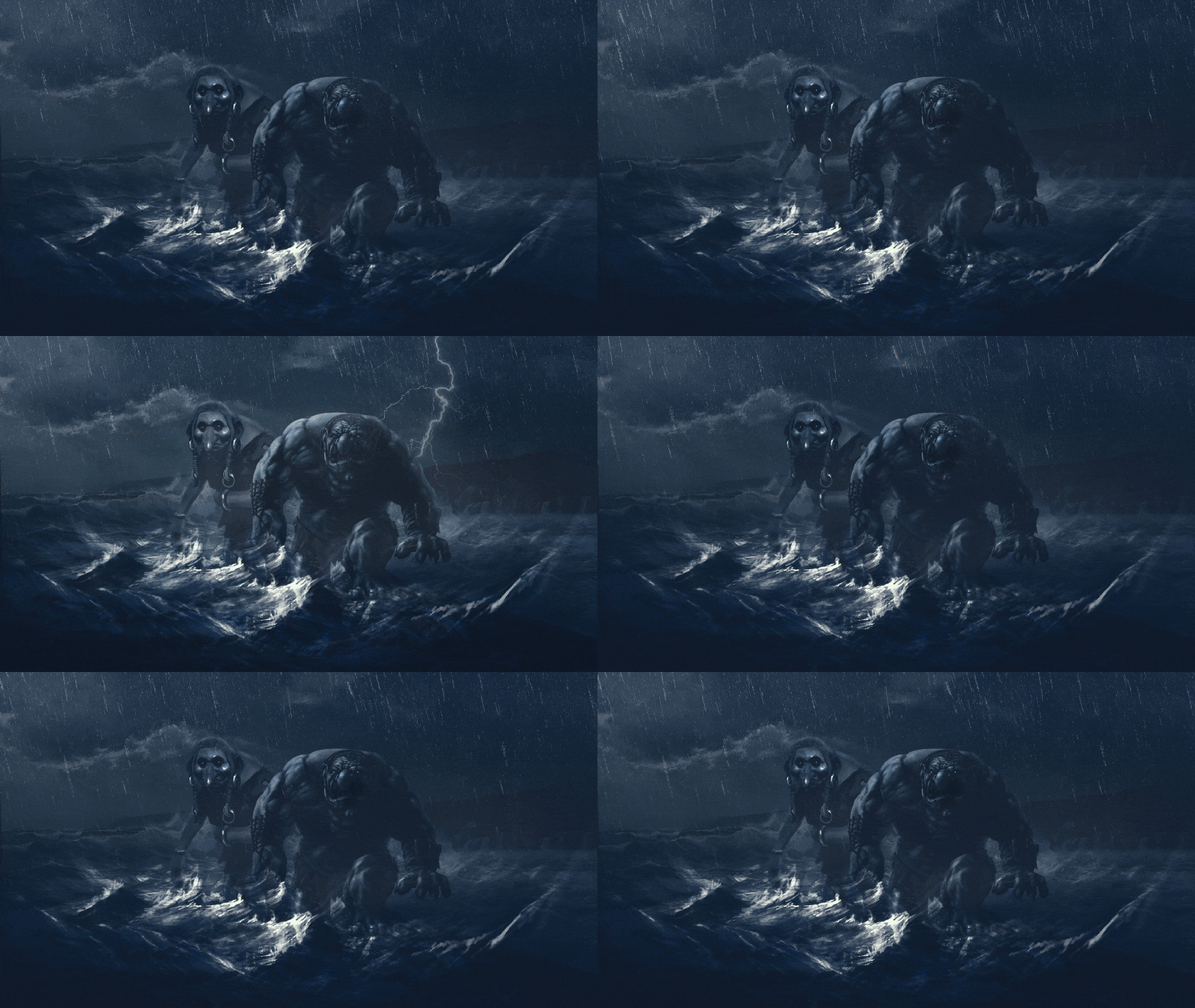
Der arrangeres to ugentlige busture. En tur går til Leirvík og den anden til Funningur, Gjógv og Eiði. Her kan man bl.a. opleve de første vikinge bosættelser, Færøerne højeste fjeld og „Kæmpen og Kællingen“.

SCUBA-DIVING
A magnificent experience. Nearly everyone remembers their first encounter with the underwater world the rest of their lives.

ROWING
Kaproning: For grupper arrangeres  kaproning ude i Skálafjørður i de færøske kaproningsbåde.

For  information about tours, please contact:

Kunningarstovan in Runavík
Tel. +298 417060
fax +298 417001
kunningarstovan@runavik.fo
www.visiteysturoy.fo

or

Kunningarstovan in Fuglafjørður
Tel. +298 737715
fax +298 445180
infoey-f@post.olivant.fo
www.visiteysturoy.fo
www.faroeislands.com
Home
Introduction
Themes
Regions
Information
Yellow Pages
Gallery
Contact
Articles (external links)
National Geographic
New York Times
Lonely Planet
Wikipedia
BBC
Related links
www.visitfaroeislands.com
www.samvit.fo
www.whaling.fo

Publisher: Pf. Sansir, Dvørgastígur 7, FO-100 Tórshavn, Færøerne, Tel. +298 355 355, Fax +298 355 350, www.sansir.fo, info(at)sansir.fo. Advertising: Sansir. Text: Gunnar Hoydal, Dánial Hoydal, Katrina í Geil, Tatjana Johnsson and others. Special thanks to: The tourist informations and VisitFaroeIslands Copyrights © Permission is required from publisher and author to reproduce text. Permission is required from photographer to reproduce photos.